Religion in architecture
God's Architecture
God's architecture. This refers to places of worship such as, temples, churches and shrines. When we refer to God's architecture we often think about specific traits that can be tied to the different religions, examples of this can be, Yew trees and Christianity as well as Moon gates and Buddhism.

I think it's interesting how in the different architectures that are associated with different religions you can see how they fit in with their respective religions.
Christian architecture
In Christian architecture, the buildings are usually quite tall and grandiose. Lot's of churches are somewhat symmetrical in the sense that they usually have quite a clear path and focuses on the centre and guides your attention towards the priest who is seen as the closest to god.
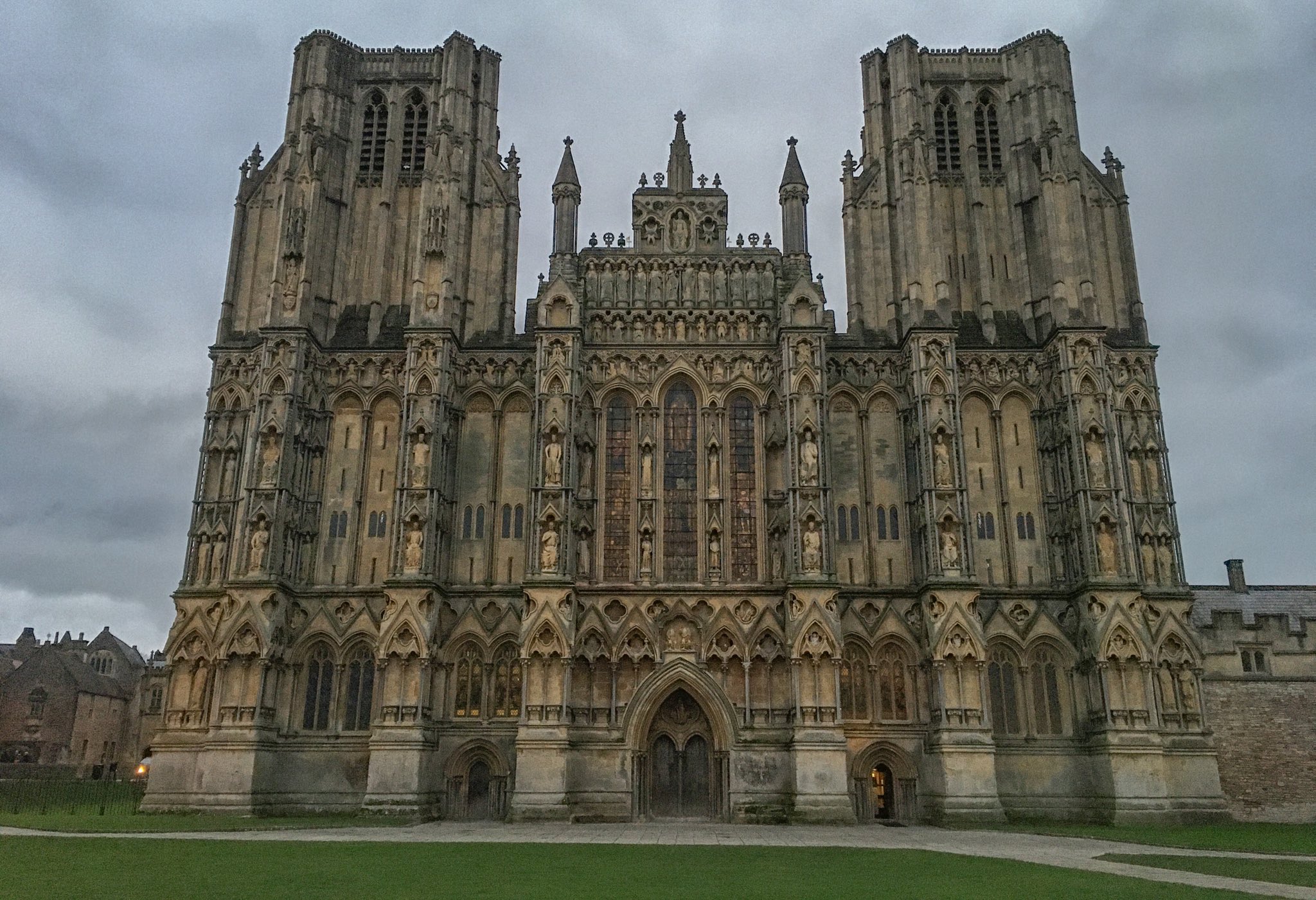
In examples such as Well's cathedral we can see that the stained glass windows are a good way of depicting the story of Christ to people who were unable to read which was much more common back then when the building was erected in 1239. Wells cathedral is known to be the first gothic cathedral to have been built in England. The building is also famous for it's west wall which features 300 medieval carvings.
Buddhist architecture
In Buddhist architecture, monasteries are considered as the places of worship. Monasteries are typically located in isolated or secluded areas that are silent. I believe that the distance that people have to travel to these monasteries to pray is intended to represent the journey of the Buddha, The story of the Buddha involves the experiencing of the two extremes, wealth and poverty, which was necessary for the Buddha to achieve enlightenment. The distance to travel from home to monastery can be interpreted as the journey from the comfort of the home to the monastery which symbolises the spirituality and the story of enlightenment.

Alot of Buddhist architects uses thresholds to define a locations boundaries, moongates were used as passageways to enter and exit the premises and they were also thought to keep demons out. Moongates can have a variety of different meanings depending on their features the tips of tiles can have talismans on the ends of them which can have a multitude of meanings depending on the talismans.
Another feature of Buddhist religious architecture is the angled corners of roofs which have a exaggerated flare at the ends which guide the eyes of viewers towards the heavenly realm.


Comments
Post a Comment